All posts by Scent Culture Institute: Smelling in Culture, Business & Society

Scent Culture Institute is a hub for projects on smelling in culture, business & society based in Switzerland: Thought leadership, cultural production, multi-sensory innovation; general management development; talks, workshops & consulting. SCI ist eine Platform für Projekte zum Geruchsinn, Riechen, Düften in Kultur, Wirtschaft, Unternehmen und Gesellschaft in der Schweiz (Zürich & Bern): Forschung, Entwicklung, Vorträge, Workshops, Beratung, kulturelle Produktion.

Smelly typography

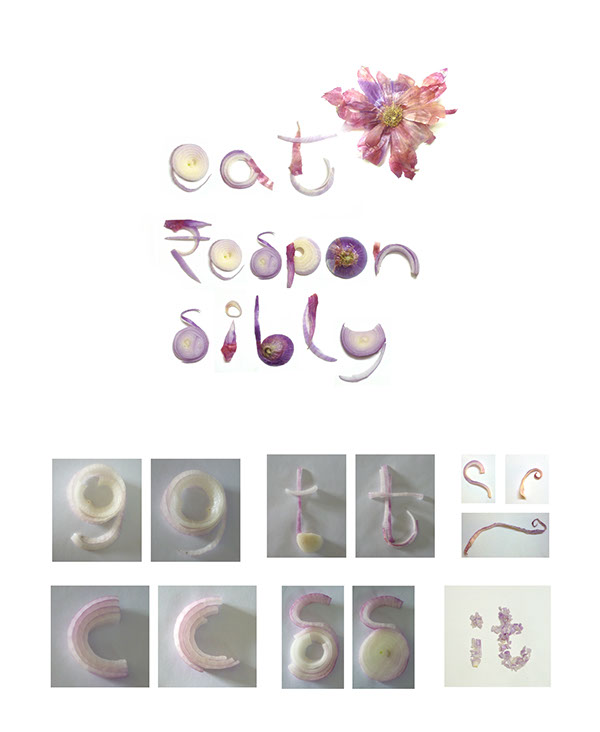
Can letters smell? How can typography smell? This school project experiments with smelly materials – in this case onions. Interestingly, there is even an economic layer of meaning: Apparently, onions are expensive in India!

Sneha Keshav: “An experimental type done as a school project. Seems apt right now, given the sky-rocketing cost of onions in India!” Found on www.behance.net.

Thank you Sneha Keshav!

Source: https://www.behance.net/gallery/10602245/Experimental-Typography

[blog_subscription_form title=”” title_following=”You are already subscribed” subscribe_text=”” subscribe_logged_in=”Click to subscribe to this site” subscribe_button=”Click me!” show_subscribers_total=true]


Smelly theory of private property

The genesis of private property has been a recurring theme in political philosophy since ancient times. In his essays on the five senses the French philosopher Michel Serres proposes a “smelly theory of private property”: Continue reading Smelly theory of private property

Scent design influences the behaviour of people in crowds at Eindhoven

In addition to light, sound, color and other design dimensions scent is increasingly used to influence human emotions and behavior. Aromatherapy is the discipline that has developed this expertise and knowledge of centuries. Scent Marketing is currently an obvious case. But there are also non-commercial contexts as this story from Eindhoven reports. Continue reading Scent design influences the behaviour of people in crowds at Eindhoven

Perfumes

“Perfumes are the soft-focus lense on our rough daily existence. They are the invisible, user-friendly interface in daily human interaction. They are sheer present – yet we have unearthed their primordial past. They seem pure phenomenon – yet they contain memory, erratic and unpredictable. And although they seem to lend themselves so well to the game of pure simulation, they do have dark and uncanny origins.” – HANS RINDISBACHER

Continue reading Perfumes

Smithsonian Design Museum: Design Beyond Vision!

Cooper Hewitt, Smithsonian Design Museum will present “The Senses: Design Beyond Vision” . In the 1980s the Swiss design thinker Lucius Burckhardt coined: “Design is invisible“.

Continue reading Smithsonian Design Museum: Design Beyond Vision!

Fragrant patterns in big data !

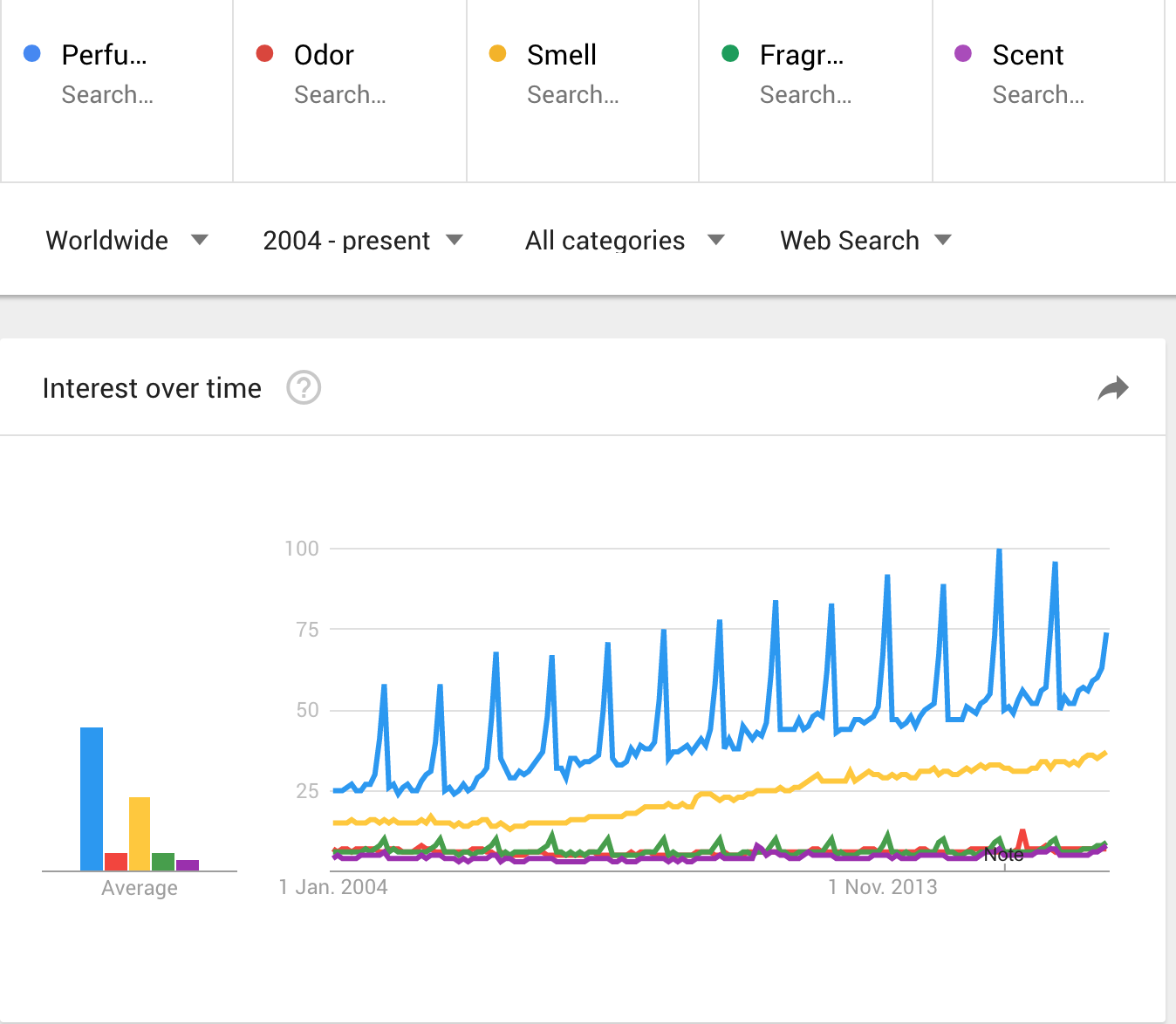
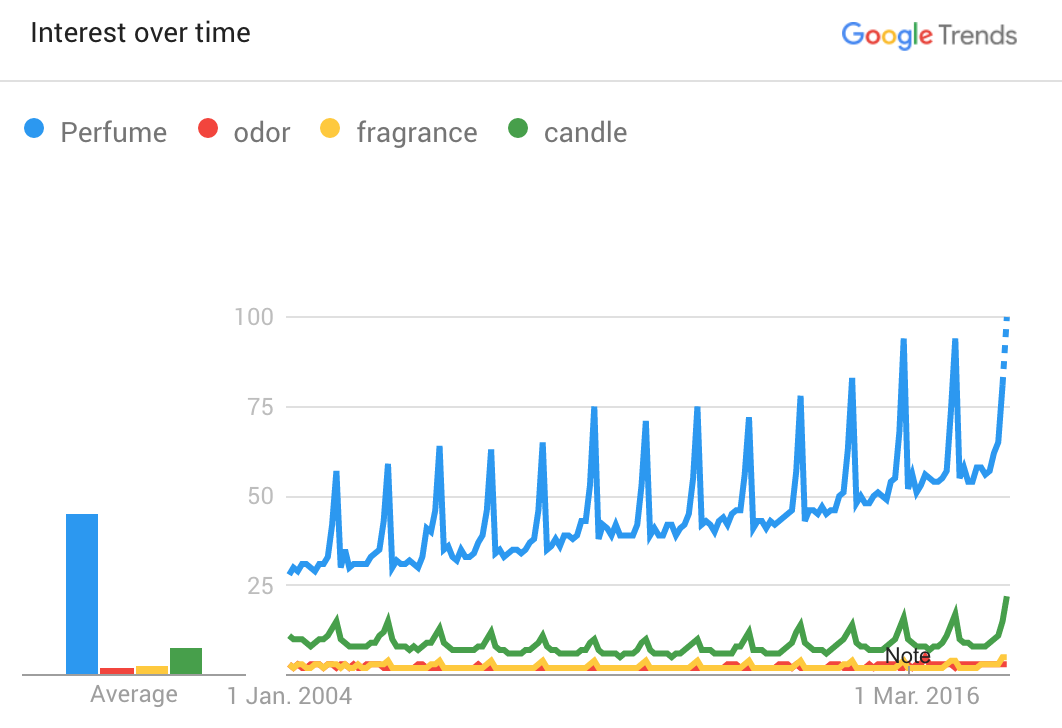
The web facility Google Trends shows how often a particular search-term is entered relative to the total search-volume across various regions of the world, and in various languages.  The horizontal axis of the main graph represents time (starting from 2004), and the vertical is how often selected terms are searched for relative to the total number of searches, globally.

Our comparison of a few olfactory terms reveals some peculiar pattern:  The blue curve on the chart below represents the searches for “perfume”. It shows systematically its annual maximum in December. Smaller spikes can also be identified for May. Accordingly, a fragrant present or at least the search for a fragrant present turns out to be the gift of choice for Mother’s Day and even more so for Christmas.


Bildschirmfoto 2017-11-14 um 20.57.20

There is no google data available for earlier periods. Yet, the popular narrative of the three Wise Men visiting Jesus after his birth and bearing the gifts of gold, fragrant frankinscense and myrh shows the fragrant beginnings of the Christian feast.

Merry Christmas!

Fragrant patterns in big data !

The web facility Google Trends shows how often a particular search-term is entered relative to the total search-volume across various regions of the world, and in various languages.  The horizontal axis of the main graph represents time (starting from 2004), and the vertical is how often selected terms are searched for relative to the total number of searches, globally.

Bildschirmfoto 2017-12-17 um 16.52.12

Our comparison of a few olfactory terms reveals some peculiar pattern:

Continue reading Fragrant patterns in big data !