“This Flow’r whose fragrance tender
With sweetness fills the air,
Dispels with glorious splendor
The darkness ev’rywhere.
True Man, yet very God;
From sin and death He saves us
And lightens ev’ry load.”
Tag Archives: literature
Ignorant smelling
“We thought it necessary to begin with the sense of smell, because of all the senses it is the one which appears to contribute least to the knowledge of the human mind.” – Etienne Bonnot de CONDILLAC Continue reading Ignorant smelling

Olfactory language in British fiction
Scent has so far remained largely sidelined into the context of the eighteenth-century novel. Reading Smell by Emily Friedman and published in 2016 provides models for how to incorporate olfactory knowledge into new readings of the literary form central to our understanding of the eighteenth century and modernity in general: the novel. Continue reading Olfactory language in British fiction

Scent Verse: Muse Booze
Scent Verse is a inspiring poetry project on Basenotes curated by writer Eddie Bulliqi. Continue reading Scent Verse: Muse Booze
Disorder of things
“The specific problem with the olfactory in this respect is that its linguistic structure of reference always throws us back into the disorder of things.” – HANS RINDISBACHER

“The Smell of Loss” – NY Times
The English author and critic Julie Myerson explores in her fictional piece the smell of a loss. It is amazing how many different associations and aspects are covered in this short piece in the New York Times. Continue reading “The Smell of Loss” – NY Times
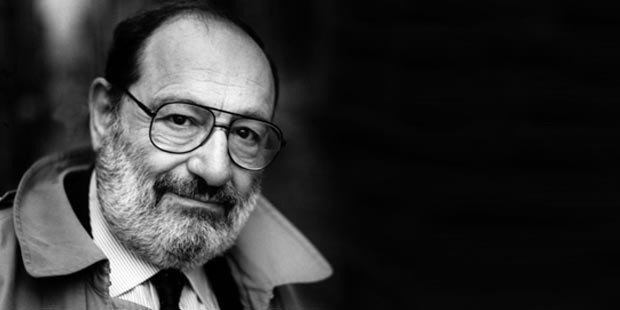
Umberto Eco R.I.P.:Turn scent into a stimulus for critical reflection!
Umberto Eco, the Italian cultural theorist and novelist who became the author of best-selling novels, notably the blockbuster medieval mystery “The Name of the Rose,†died last week in Milan. Eco was a contributor to our thinking on scent culture.
Continue reading Umberto Eco R.I.P.:Turn scent into a stimulus for critical reflection!
Turn scent into a stimulus for critical reflection!
Umberto Eco, the Italian cultural theorist and novelist who became the author of best-selling novels, notably the blockbuster medieval mystery “The Name of the Rose,†died last week in Milan.

Eco was a contributor to our thinking on scent culture. According to various internet entries Umberto Eco once noted the olfactory qualities of books: “I love the smell of book ink in the morning.†This love for the smell of books is, in fact, shared by many writers, including as Ray Bradbury, author of Fahrenheit 451, and was the subject of a recent post of ours.
And in his groundbreaking Theory of Semiotics, Eco thinks of scents as part of the semiotic field. He refers to Baudelaire’s “code of scents†and coins the phrase “olfactory signsâ€: “If there are scents with a connotative value in an emotive sense then there are also odors with precise referential values.”
In a short essay on television Eco calls for a critical reflection on the social and cultural consequences. In fact, we later paraphrased a key sentence from Eco’s essay when starting the Scent Culture Institute and drafting our foundation statement: “Western Culture & Society will only develop further, if it turns scent into a stimulus for critical reflection – not an invitation for hypnosis.”
References:
Eco, U. (1976). A Theory of Semiotics. Bloomington: Indiana University Press.
Eco, U. (1993). “Can television teach?†In M. Alvarado, R. Collins, & E. Buscombe (Eds.), The Screen education reader: cinema, television, culture: 95–107. New York: Columbia University Press, p. 97.

Volatile!: A Poetry and Scent Exhibition
What if every poem had its own fragrance, beyond the literal smell of the materiality of the page? What if one could smell a poet’s imaginative, conceptual, intellectual world, the text unfurling into an aroma? In Volatile!, curator and design historian Debra Riley Parr presents a number of objects and experiences that invite speculative connections between poetry and scent including our friend & collaborator Brian Goeltzenleuchter. Continue reading Volatile!: A Poetry and Scent Exhibition
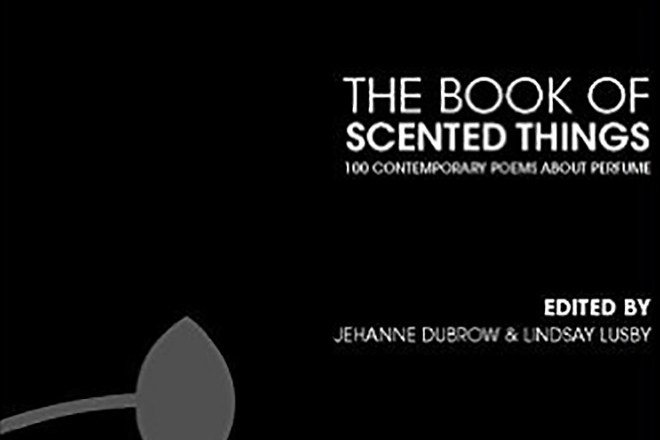
100 Contemporary Poems about Perfume
The Book of Scented Things collects poems reflecting the experience of selected vials of perfume. Continue reading 100 Contemporary Poems about Perfume