
The 4th Space, Creativity & Organizing Workshop was devoted to the senses – in particular to the sense of smell. Continue reading “Mindblowing” Workshop on Smelling & Organizing at Tallinn #offegos2018
Category Archives: SCI talks & presentations
SCI talks & presentations to a non-academic audience

Rotten eggs on the road?
A car is a means of transportation. This is obvious. What is less obvious however is that the car shows specific sensory or even olfactory qualities: A car uses smelly petrol or diesel. Driving a car even turns the vehicle into an openair-design machine. At the end of the day emissions scent the environment. On the other hand, drivers increasingly care about the odors in the interior of a car. And the users leave their olfactory traces in the car. Thus, the interior smell preserves the use of the car. The car serves as an “olfactory diary” as Caro Verbeek called it. This provisional list of facets demonstrates the car as an olfactory artifact.

In my talk at yesterday’s edition of Odorama at Mediamatic in Amsterdam I explored different facets of the car as an olfactory artifact. Some of the material I presented has recently been published in an essay. This is the reason why I would like to focus this post on the concluding passage of my talk:
The epistemology of car smells.

Knowing smells
In everyday language epistemology refers to knowledge. However, the point is not the common knowledge about the smell. Instead, an epistemology of car smells refers to what smell actually know:
The smell of rotten eggs for example points at the catalytic converter. Normally, the gasoline that fuels a car contains sulfur. The catalytic converter takes this by-product and converts it into odorless sulfur dioxide. In this respect, the smell of rotten eggs signals a technical problem with the catalytic converter.
Similarly, a whiff of maple syrup could point at leaking coolant since coolant contains ethylene glycol, which smells sweet but is actually very toxic. Moreover, how-to pages on the internet mention a number of other smells that car drivers might notice: the smell of fire & brimstone, a burning moldy newspaper, a locker room or burned carpet smells.
Smells as symptoms
What these smells have in common is that they can be a symptom of an underlying problem with the car. These car smells activate the nose as an diagnosing device. What is interesting about how-to pages addressing car smells? Why do I talk about this as a scholar on scent and smell culture?
A healthy car is odor-free
We live in an widely de-odorized world. According to the sociologist Zygmunt Bauman â€modernity declared war on smellsâ€. In this respect, it is worth reading how the how-to pages address the car smells: â€A healthy car should be emitting no smells“. In other words a car that emits smells needs treatment because smells “may mean your car is sick“! Isn’t it striking how agency and personhood is attributed to the car? And we all know that hospitals have also served as a means to surround fleeting smells with a fence. Even a car should conform with the the social norm of a deodorized world!
Smell is a cognitive power
One easily thinks of the knowledge about smell (e.g. knowledge about olfactory families etc.). It is less common to think of smell as a cognitive quality or perhaps even power. Yet, smell is a cognitive power in its own right. An epistemology of car smells makes the point that smells can be knowing smells. Given the ephemeral materiality of smells it is difficult to think of smells as objects and agents. In fact, “knowing smells” might take the point too far. Yet, there is a growing literature on the epistemic (i.e. knowledge) qualities and services of a visual practice, a photograph or a tube in the laboratory. By the same token smelling a burning molding newspaper in the car can be considered a knowledge practice. It is this underexplored type of knowledge practice that makes car smells an interesting topic in the emerging smell culture discourse.
The auto mechanic as a smell expert
In times of growing specialization and differentiation one thinks of perfumers as the and perhaps even the most privileged smell specialists: A perfumer knows the smells, a perfumer can name the smells, a perfumer might even be able to analyze and synthesize the smells. This is all true. No doubt about this. But it is also true that olfactory expertise has always been an integral part of professional knowledge cultures: In the middle ages monks used smells to diagnose an illness (e.g. Duft 1972). Other professions and everyday practices also hinge upon sensory work including smelling (Curtis 2008; Hockey 2009). Given the increasing relevance of objective measurement technologies it is certainly valid to speak of a crisis of legitimacy with respect to the sensory work of diagnosis (Maslen 2016). Yet, the examples of car smells demonstrate the lasting relevance of smelling as a knowledge practice. Smell is part of the knowledge in numerous professions and crafts (including the auto mechanic).
Let’s continue to think about crafts and professional practices along this line of sensory practice.
[blog_subscription_form title=”” title_following=”You are already subscribed” subscribe_text=”” subscribe_logged_in=”Click to subscribe to this site” subscribe_button=”Click me!” show_subscribers_total=true]
References
Curtis, B. (2008). «I can tell by the way you smell»: Dietetics, Smell, Social Theory. The Senses and Society, 3(1), 5–22.
Duft, J. (1972). Notker der Arzt: Klostermedizin und Mönchsarzt in frühmittelalterlichen St. Gallen. St. Gallen: Fehr.
Ferdenzi, C., Licon, C., & Bensafi, M. (2017). Detection of sickness in conspecifics using olfactory and visual cues. Proceedings of the National Academy of Sciences, 114(24), 6157–6159.
Hockey, J. (2009). «Switch on»: sensory work in the infantry. Work, Employment & Society, 23(3), 477–493.
Maslen, S. (2016). Sensory Work of Diagnosis: A Crisis of Legitimacy. The Senses and Society, 11(2), 158–176.
Image source:
http://blog.autoparkhonda.com/new-car-smell/
Photographs of Odorama by Caro Verbeek, Giulia Menicucci & Saskia Wilson-Brown &

Smelling in the creative economy
“Duft, Design & Kultur: Wo bleibt das Riechen in der Creative Economy?”, this is the title of an upcoming talk (24 January 2018, 19.00) at the Inatura in Dornbirn.

Enchanting worlds
It was the social theorist Max Weber who identified progressive disenchantment as an underlying process of modernity. More recently, this creed of modern thinking has increasingly been challenged. Thus, enchantment often evokes the sublime and refers to an aura of authentic presence. Moreover, enchantment has been used as an analytical lense to look at consumer culture as well as new worlds of work. Accordingly, symbolic manipulation is used to enchant customers and employees. Continue reading Enchanting worlds
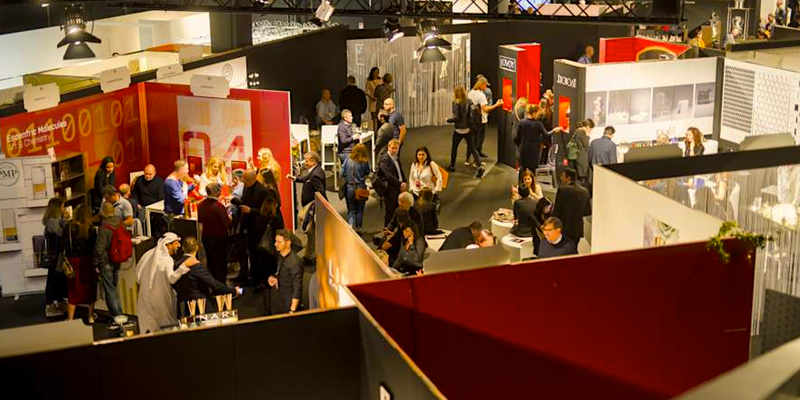
Indie Perfume: Disruption and Dissent
The Perfumer’s Studio at Los Angeles hosted a talk & discussion with Claus Noppeney entitled: “Indie Perfume: Disruption and Dissent”. Continue reading Indie Perfume: Disruption and Dissent

How to remain creative in artistic perfumery? – Panel at Esxence 2017
Bodo Kubartz and Claus Noppeney organized and facilitated the session “Staying ahead: how to remain creative in today’s competitive niche perfumery.â€Â The abstract set the stage: “Over the last couple of years, the niche perfume segment has become increasingly competitive. What are the challenges that niche perfumery is facing today? What are the opportunities to stay ahead of the game?†Continue reading How to remain creative in artistic perfumery? – Panel at Esxence 2017

Scent Masquerade: Gendering your Nose
Do you remember the commercials that promote deodorants and openly appeal to sexist phantasies? Women are drawn in hordes to any male who has sprayed himself liberally with the deodorant – the “Axe effectâ€. The commercials have been known as the world’s sexist advertising campaign for many years.  Continue reading Scent Masquerade: Gendering your Nose
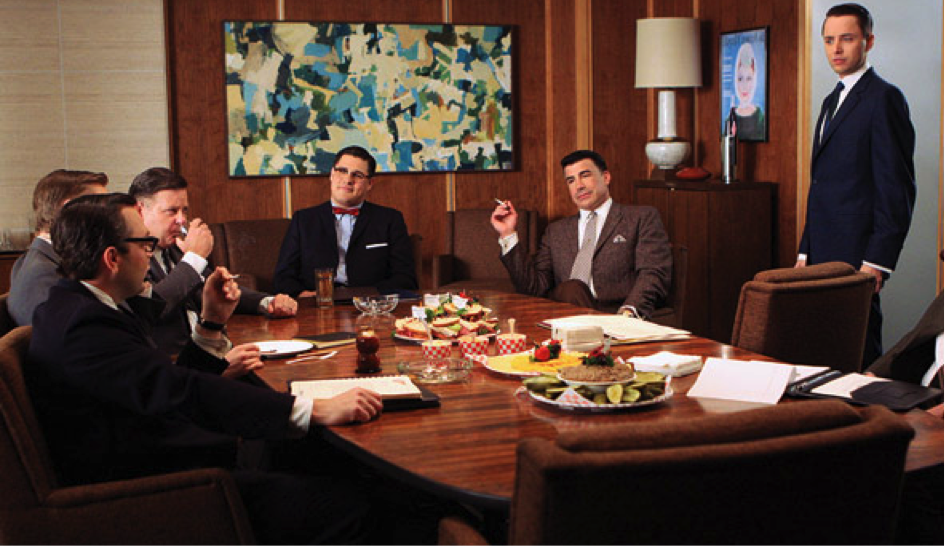
Beyond De-Odorant & Scent-Marketing: The Sense of Smell at the Workplace
It is apparent that the sense of smell can hardly be switched off at the workplace. Yet, business and management research has only recently started to explore its relevance. Continue reading Beyond De-Odorant & Scent-Marketing: The Sense of Smell at the Workplace

Constructive Criticism: Fueling Fragrance Interest
Here are the slides of the recent the talk: Beyond the Juice: The Role of Blogs and Awards, The discussion at the Institute for Art and Olfaction (IAO) in Los Angeles was recently featured on the Fragrance Foundation website in a brief piece by Dawn McCoy. And below is a PDF of the presentation for Beyond the Juice: The Role of Blogs and Awards. Continue reading Constructive Criticism: Fueling Fragrance Interest

Beyond the Juice: The Role of Blogs and Awards
Artistic perfumery has essentially been about the juice from its very beginning in the late 1970s: Jean Laporte started L’Artisan Parfumeur and focused on the juice as well as its creator. Later on, corporate players became interested in this vibrant segment and launched their own niche lines. More recently, the Institute for Art and Olfaction (IAO) was created, signaling a comprehensive “new approach to the olfactory arts“ (Saskia Wilson-Brown, IAO founder’s statement, 2012). Consequently, the IAO’s prominent Art & Olfaction Awards highlight the artistry in perfumery. In fact, the awards propose to celebrate the value of the juice, and the juice alone.
Continue reading Beyond the Juice: The Role of Blogs and Awards