
So, are you making a list and checking it twice? ‘This is the season of lists, after all: wish lists, end-of-year/best-of lists, etc. Perfumes lists are aplenty this time of year (nearly as common as perfume ads) but here at SCI we’re especially fond of perfume books. Continue reading Perfume Book Lists
Category Archives: Scent Culture Monitor

CFP Future Anterior: Olfaction & Preservation Extended Deadline
CALL FOR PAPERS:Â Olfaction and Preservation
Special issue co-edited by Jorge Otero-Pailos and Adam JasperÂ
Extended Deadline: Monday 22 February 2016

Future Anterior publishes essays that explore preservation from historical, theoretical and critical perspectives. For this issue, we seek papers on architecture, atmosphere, preservation and the sense of smell. We seek scholarly papers that take stock of the recent surge of interdisciplinary research on olfaction and speculate on its relevance to the practice of preservation.
More at:Â http://www.e-artnow.org/announcement/article/ACTION/11702/
CFP Future Anterior: Olfaction & Preservation
Future Anterior is a peer-reviewed journal that approaches the field of historic preservation from a position of critical inquiry. For the upcoming special issue co-edited by Joerge Otero-Pailos & Adam Jasper, the journal seeks papers on architecture, atmosphere, preservation and the sense of smell. Continue reading CFP Future Anterior: Olfaction & Preservation

The Scent of Materials
“Olfactory art makes scents – and who nose where it might lead us?”
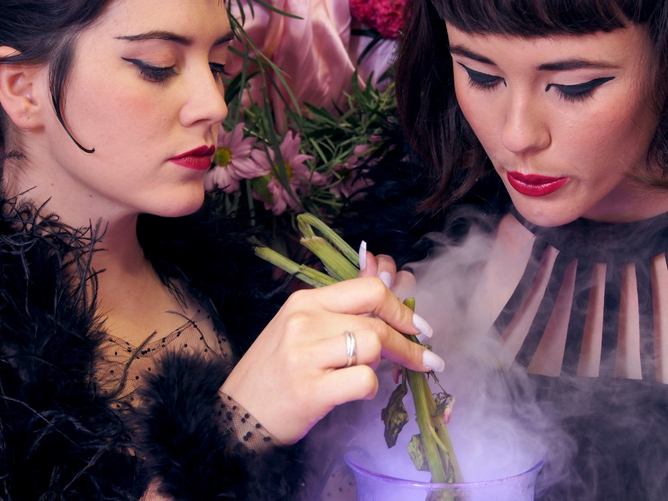
“Olfactory art†– art concerned with smell – is currently a relatively minor field. But a growing number of contemporary artists are starting to explore the potentials of olfactory art. [Last] year’s Next Wave festival in Melbourne presents Smell You Later (May 1-11), a series of “scent-based encounters†in bathrooms, corridors, lobbies and stairwells of various festival venues.
More at:Â http://theconversation.com/olfactory-art-makes-scents-and-who-nose-where-it-might-lead-us-25643

Next Wave Festival: Scent narrative
Established in 1984 to foster creativity and experimentation, Next Wave is the most comprehensive platform in Australia for a new generation of artists taking creative risks. With Next Wave celebrating its 30th anniversary in 2014, curator Katie Lenanton decided upon the idea of “celebration†as the “scent narrative†underpinning the project: Continue reading Next Wave Festival: Scent narrative

STINK! Documentary
The sense of smell is often an issue in public discourse. Current odorizing and scent marketing practices are under critical scrutiny. The current documentary Stink! appears as a challenge to the industry. Continue reading STINK! Documentary

Against the Scentless: Returning the Sense of Smell to the Arts
“…The arts world of the 21st century should take these innovations as a challenge to make resonant new works incorporating aromas, and not allow these tools to simply become devices for social grooming and more effective product placement. Continue reading Against the Scentless: Returning the Sense of Smell to the Arts

Flower Power | REORIENT – Middle Eastern Arts and Culture Magazine
An excellent piece by Dana El Masri on “cities of jasmine, roses of beloveds: scent, identity, and culture in the Middle Eastâ€: Continue reading Flower Power | REORIENT – Middle Eastern Arts and Culture Magazine
Art Scents: Perfume, Design and Olfactory Art
An excellent must-read academic piece by Larry Shiner on the confusing but ever-relevant subject of perfumes are art. (For our brief take on the matter, see The Art of Scent & The Scent of Art.)

Claims that perfumes are art have been made before, but a recent art museum exhibit of a dozen perfumes under the title ‘The Art of Scent’ has raised the issue with a new insistence, although with an absence of theoretical justification. Part 1 of the paper develops an aesthetic case for perfume as an art form by answering Beardsley’s and Scruton’s arguments against odours (and implicitly perfumes) as the basis for aesthetic objects and works of art. Part 1 concludes that perfumes can in fact manifest the required structure, temporality, symbolism and expressivity for art status. Part 2, on the other hand, develops a contextualist case against perfumes as works of fine art by analyzing a typical contemporary art practice involving a perfume and arguing that, by contrast, typical perfumery practices lack crucial elements required to make perfume an art form and that perfume should be considered one of the design arts. Part 3, instead of trying to reconcile the impasse between the conclusions of Parts 1 and 2 with a theory of the fine arts that combines aesthetic and contextual elements, instead chooses to follow Dominic Lopes’ proposal that in resolving claims to art status we pursue analogies and ‘paths’ offered by the established individual arts. Using music as an example of a long established art form and the art quilt as an example of a recently established art, I suggest what it might take for ‘art perfumes’, or more accurately, ‘art scents’, to emerge and become justifiably included among the fine arts.